
10 Best Conical Burr Hand Grinders to Buy in 2026
A good cup of coffee can begin with a small, steady ritual: weighing whole beans, adjusting a grinder, and listening for the soft crunch as burrs turn. A Conical Burr Hand Grinder offers a compact way to grind coffee without relying on electricity. For travelers, apartment dwellers, and anyone who enjoys a slower morning, that simplicity can be appealing. But hand grinding is still work. A light, portable model may take longer to use, while a larger grinder can feel tiring to carry.
This guide to the 10 Best Conical Burr Hand Grinders to Buy in 2026 focuses on details that affect daily use, not just attractive specifications. Burr material, adjustment steps, handle comfort, capacity, and ease of cleaning all matter. So does consistency, though results can vary with bean type, grind setting, and brewing method. A setting that suits a pour-over may not work well for espresso. There is no magic grinder. And product claims deserve a careful look.
The picks are intended to help readers compare practical strengths and trade-offs before buying. Consider how much coffee you make, where you grind, and whether precise adjustments matter more than low weight or price. If possible, check current product details and return policies, since designs and availability can change. One honest limitation: even a well-made hand grinder may require patience, especially for fine settings. That is part of the appeal for some people—and a reason others may prefer an electric model.
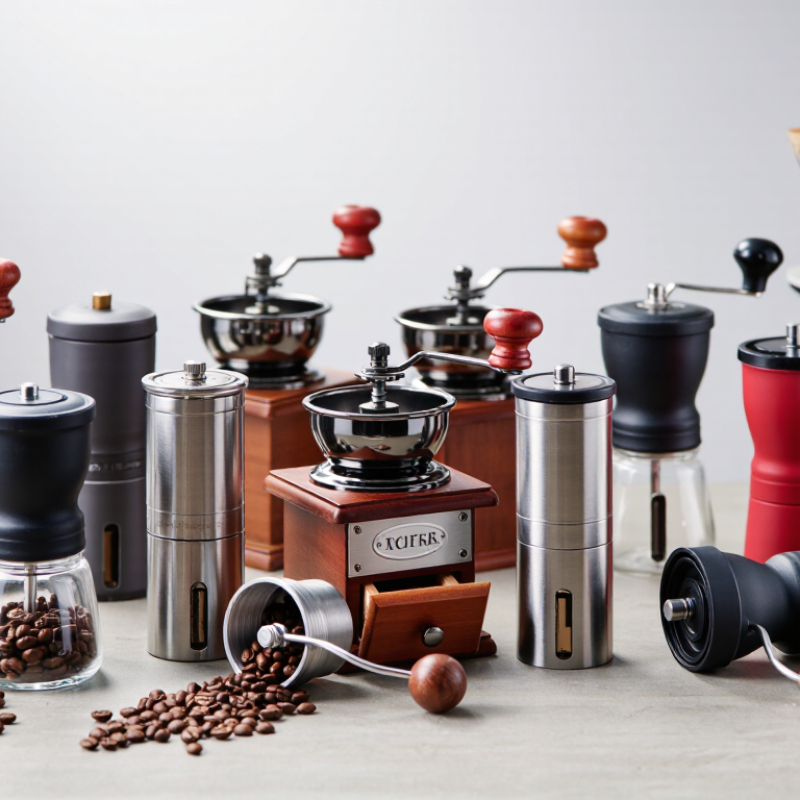
How Conical Burr Hand Grinders Work
In a conical burr hand grinder, whole beans fall between a cone-shaped inner burr and a surrounding ring burr. Turning the handle rotates one burr, breaking beans into smaller particles. The gap between burrs largely controls grind size: a narrower gap makes finer grounds, while a wider gap makes coarser ones. It is a simple mechanism, but not a perfectly uniform one. Some fine dust and larger fragments may remain together.
Grind consistency matters because water extracts compounds at different rates from different particle sizes. The Specialty Coffee Association’s Brewing Control Chart gives a general brewed-coffee extraction-yield range of 18–22 percent. That benchmark helps explain why grind adjustment can change flavor, though it cannot predict taste on its own. Brewing time, water temperature, and bean freshness also matter. A hand grinder gives direct control, but turning the handle faster is not necessarily better.
Tips: Set the burr gap before grinding, then use the same dose and brewing method for each test. If the cup tastes harsh, try a slightly coarser setting; if it tastes thin, try finer. Change one variable at a time. Small adjustments can feel fussy, and I sometimes still overshoot—but keeping notes makes the next cup easier to diagnose.
10 Best Conical Burr Hand Grinders to Buy in 2026 – How Conical Burr Hand Grinders Work
This brand-free guide compares common hand-grinder configurations rather than specific products. Capacity, adjustment design, and performance vary by model; check the manufacturer's specifications before buying. Conical burrs crush beans between a cone-shaped inner burr and a surrounding ring burr. Turning the handle drives the burrs, while the adjustment mechanism changes the gap to produce coarser or finer grounds.
| Rank | Grinder Type | Burr Material | Typical Bean Capacity | Adjustment Style | Best Suited For | Key Buying Consideration |
|---|---|---|---|---|---|---|
| 1 | All-round stainless-steel grinder | Stainless steel | About 20–30 g | Stepped or click adjustment | Daily pour-over and French press | A balanced choice for users who want a durable, portable grinder with settings for several brew methods. |
| 2 | Precision-focused steel-burr grinder | Hardened stainless steel | About 20–30 g | Fine, repeatable click adjustment | Espresso and carefully dialed-in brews | Check how small the adjustment increments are and whether the setting can be repeated reliably. |
| 3 | Compact travel grinder | Stainless steel or ceramic | About 15–25 g | Internal stepped adjustment | Travel, camping, and single servings | A smaller body packs easily, but its lower capacity may require grinding multiple doses for larger brews. |
| 4 | Large-capacity hand grinder | Stainless steel or ceramic | About 30–40 g | Stepped adjustment | Multiple cups or larger brewers | Confirm that the bean chamber holds enough for your usual batch; a larger grinder can be bulkier to carry. |
| 5 | Lightweight ceramic-burr grinder | Ceramic | About 20–30 g | Stepped adjustment | Casual brewing and budget-conscious use | Ceramic burrs resist corrosion, but ceramic can chip if dropped and grinding may take more effort in some designs. |
| 6 | External-adjustment grinder | Usually stainless steel | About 20–30 g | Adjustment dial on the outside | Frequent switching between brew methods | External controls make settings easy to change; check that the dial is secure and clearly indexed. |
| 7 | Internal-adjustment grinder | Stainless steel or ceramic | About 20–30 g | Adjustment beneath the burr or catch cup | Users who keep one preferred setting | Often has a simple exterior, but changing settings may require removing parts or emptying the grinder. |
| 8 | Foldable-handle travel grinder | Usually stainless steel | About 15–25 g | Stepped adjustment | Compact storage and occasional travel | A folding handle saves space; check its hinge and grip for comfortable, stable turning. |
| 9 | Long-handle leverage grinder | Usually stainless steel | About 20–30 g | Stepped or click adjustment | Users who prefer easier manual turning | A longer handle can improve leverage, though it may make the grinder less compact in a bag. |
| 10 | Simple entry-level conical-burr grinder | Ceramic or stainless steel | About 20–30 g | Basic stepped adjustment | New manual-grinder users | Prioritize stable burr alignment, a comfortable handle, and accessible replacement parts over extra features. |