Top Car Audio Manufacturers for Global Buyers?

Choosing among the top car audio manufacturers is not simply a matter of comparing wattage, logos, or price tags. Global buyers need dependable engineering, consistent production, clear warranty support, and products that suit different vehicle platforms. A polished amplifier may fail to impress when its wiring, tuning, or installation is poorly managed.

Scott Buwalda, founder of Hybrid Audio Technologies and a respected car audio competition expert, has expressed a practical principle: “The goal of any audio system is to reproduce the original recording as accurately as possible.” That idea remains useful when evaluating speakers, subwoofers, amplifiers, digital signal processors, and complete upgrade systems. Specifications matter. So does the listening experience.

This guide examines leading manufacturers through an international buyer’s lens. It considers sound quality, manufacturing reputation, product compatibility, technical support, innovation, and long-term value. Some brands excel at studio-like detail. Others deliver powerful bass in compact spaces. A few offer both, but usually at a higher cost.

Real-world details can change the decision. A small hatchback may need a shallow subwoofer. A luxury vehicle may require careful integration with factory electronics. Regional availability also affects delivery times and after-sales service.

No ranking is perfect. Personal taste still matters. A warm sound can feel more enjoyable than a strictly neutral one. Buyers should compare verified specifications, installation requirements, and trustworthy reviews before purchasing. The strongest manufacturer is not always the most famous. It is often the brand that performs reliably in your vehicle, climate, budget, and listening environment.
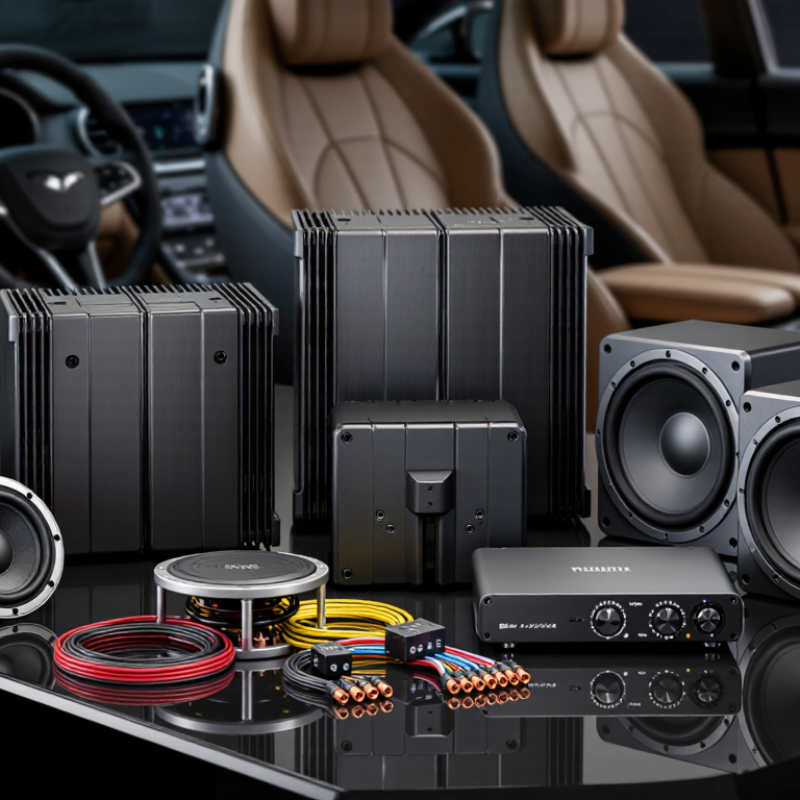
Top Car Audio Manufacturers for Global Buyers?

Define OEM and Aftermarket Segments with 2024 S&P Global Mobility Data

Choosing top car audio manufacturers requires a clear market definition. OEM systems are installed during vehicle production and designed for a specific model, cabin, and electrical architecture. Their value depends on integration, reliability, warranty support, and stable supply.

The aftermarket includes replacement head units, amplifiers, speakers, subwoofers, and accessories sold after vehicle registration. According to 2024 S&P Global Mobility data, the global vehicle parc is aging in many markets. This supports demand for upgrades and replacement components. However, demand differs by vehicle age, income, driving habits, and regional installation standards. A supplier may excel in OEM contracts but perform poorly in aftermarket distribution. That difference is easy to miss.

Tips: Compare both segments separately. Check fitment coverage, technical documentation, testing records, and installer feedback. Ask whether products support modern vehicle networks, steering controls, and factory safety features. Confirm return procedures before placing large orders. Samples reveal more than brochures. Sometimes, even reliable suppliers underestimate local service needs. Buyers should review shipment consistency, communication speed, and failure rates over several orders. S&P data offers useful market context, but it cannot replace direct product verification. A careful evaluation should combine industry data, hands-on testing, and transparent supplier evidence.

Gauge Manufacturer Reach Against OICA’s 93.5 Million 2023 Vehicles

Global car audio manufacturers should be measured against vehicle reach, not product visibility alone. OICA’s 2023 Production Statistics recorded 93.5 million motor vehicles worldwide. That figure shows the opportunity, but it also exposes a difficult question: how many new vehicles can an audio supplier actually serve?

A manufacturer with factories near major production clusters may respond faster and reduce freight risk. Regional engineering teams also matter. They can adapt speakers, amplifiers, and software to different cabin designs. S&P Global Mobility’s 2024 automotive outlook highlights continued software integration and changing vehicle architectures. Audio suppliers therefore need more than strong sound tests. They need stable electronics sourcing, documented quality systems, cybersecurity controls, and long-term technical support.

Production volume is only one measure. Aftermarket coverage, dealer access, installation training, and replacement-part availability reveal practical reach. A supplier may claim global capability, yet offer limited support outside its home market. That gap is easy to miss.

Look beyond brochures.

Procurement teams should compare warranty data, factory audits, certification records, and delivery performance. Industry market studies also disagree on the exact value of the global car audio sector. Their different methods weaken direct comparisons. That uncertainty deserves attention, not convenient rounding. The strongest manufacturer is not automatically the largest one. It is the one that can support consistent performance across more of the 93.5 million-vehicle ecosystem.

Top Car Audio Manufacturers for Global Buyers? — Manufacturer Reach Against OICA’s 93.5 Million 2023 Vehicles

Global motor vehicle production reached 93,546,599 units in 2023, providing the broadest annual production base for evaluating potential automotive audio-equipment reach. The figures below are reported by OICA.

Source: International Organization of Motor Vehicle Manufacturers (OICA), Production Statistics 2020–2023. Values represent total motor vehicle production worldwide.

Compare Harman, Bose, Sony, Pioneer, and Alpine by Product Coverage

Top Car Audio Manufacturers for Global Buyers?
Compare Five Leaders by Product Coverage

Global buyers should compare product coverage, not logo recognition. Five leading manufacturers divide the market differently. One concentrates on factory-installed premium systems and digital signal processing. Another covers luxury cabins, aftermarket speakers, headphones, and connected audio. A third offers broad consumer electronics, compact amplifiers, and replacement head units. The remaining two are stronger in aftermarket receivers, subwoofers, marine units, and professional tuning tools. This difference matters when a buyer needs one supplier across several vehicle platforms.

Grand View Research estimates the global automotive audio market will expand at about 6.5% annually through 2030. That growth reflects larger displays, wireless integration, and demand for richer cabin sound. However, market growth does not guarantee equal service quality. A supplier with wide product coverage may provide weaker regional support. I have also seen impressive specifications fail in real vehicles because factory wiring, cabin acoustics, or software compatibility was overlooked. Product sheets can hide that problem.

Tips: Request compatibility lists, warranty terms, regional certifications, and replacement-part availability. Compare speaker sensitivity, amplifier power, tuning flexibility, and installation depth. The Consumer Technology Association reports continuing growth in connected-device adoption, but connected features can age quickly. Choose systems with update support and physical controls. Do not trust peak wattage alone. A modest system, correctly tuned, often sounds better than a powerful system installed carelessly.

Assess Sound Quality Using 2024 J.D. Power Satisfaction Metrics

For global buyers, car audio quality should be judged beyond speaker count and advertised wattage. The 2024 J.D. Power satisfaction metrics offer a useful reference because they reflect real owner experiences with infotainment systems. Owners assess sound clarity, system controls, connectivity, and daily usability after living with their vehicles.

A strong result suggests fewer frustrations during ordinary use. Test vocals at low volume, then check bass response near the rear seats. Listen for distortion when several instruments play together. Voice prompts should remain understandable beside highway noise. Physical controls also matter, especially when sunlight makes a touchscreen difficult to read.

However, these metrics do not measure every audio detail. Survey responses can reflect software delays, pairing problems, or confusing menus rather than speaker performance alone. Results may also reflect North American driving habits, so international buyers should interpret them carefully. I would compare satisfaction scores with an in-person audition and a familiar playlist. That approach is imperfect, but it exposes weaknesses that specifications hide. Some systems sound impressive for two minutes. Daily use tells a different story.

Screen Suppliers by UNECE R10, ISO 9001, Warranty, and TCO Criteria

Top Car Audio Manufacturers for Global Buyers?

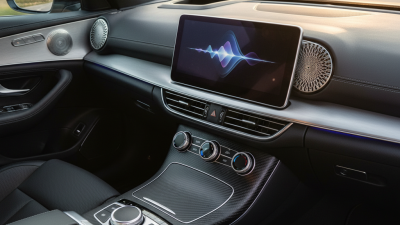
For global buyers, a car audio screen should pass more than a showroom test. UNECE R10 evidence helps confirm electromagnetic compatibility for applicable vehicle markets. Ask for the approval number, product variant, and testing scope. A certificate for one hardware version may not cover another. Check production samples against the approved configuration. Small changes in wiring can affect compliance.

Tips: Request current documents before negotiating price. Verify the ISO 9001 certificate through the issuing body. Review warranty length, covered parts, labor terms, and response times. Ask who pays return freight. Clarify software support and replacement procedures. Keep every promise in the purchase contract.

Total cost of ownership extends beyond the screen price. Include tooling, shipping, installation time, training, firmware updates, and failure handling. A cheaper unit may create higher workshop costs. Our early estimates sometimes missed integration labor. That mistake was expensive. Compare expected failure rates with real service records, not optimistic claims. Regional radio rules, vehicle interfaces, and data requirements also need review. A responsible supplier should provide traceable test reports and practical technical support. Some documentation may still be incomplete, so independent verification remains wise.

Top Car Audio Manufacturers for Global Buyers? - Screen Suppliers by UNECE R10, ISO 9001, Warranty, and TCO Criteria
Anonymous Supplier Profile UNECE R10 Evidence ISO 9001 Evidence Warranty Position Indicative TCO Level Best-Fit Buyer Requirement Recommended Due-Diligence Documents
Profile A: Vehicle-Integration Specialist Priority Verified
Product or vehicle-level EMC approval documentation should be available for the target market. UNECE R10 concerns electromagnetic compatibility, not audio performance.
Preferred
Current ISO 9001 certificate with matching legal entity, scope, and certificate validity dates.
Typically negotiated to align with the vehicle program warranty, often 3–5 years for qualified projects. Final terms must be stated in the supply contract. Medium initial cost / Low integration risk OEM, Tier 1, and fleet projects requiring stable CAN/LIN integration, documented validation, software support, and controlled engineering changes. UNECE R10 approval or test evidence, EMC test report, ISO 9001 certificate, PPAP or equivalent quality file, change-control procedure, and warranty policy.
Profile B: High-Volume Contract Manufacturer Model-Specific
Compliance may exist only for selected product families. The approval number, covered variants, installation conditions, and market scope must be checked.
Commonly Available
Verify that the certificate covers design, manufacturing, testing, and after-sales activities where applicable.
Common commercial offers range from 12–36 months, subject to annual volume, failure-rate targets, and return logistics. Low unit cost / Medium qualification effort Importers and distributors seeking competitive factory pricing, private-label production, standardized platforms, and scalable monthly capacity. Certificate of conformity, R10-related technical file, factory audit report, production-capacity statement, inspection plan, defect-rate data, and spare-parts commitment.
Profile C: Premium Connected-Systems Supplier Required for Applicable Markets
EMC compliance should be demonstrated for the complete installed configuration, including wireless modules, displays, amplifiers, and wiring.
Preferred
A valid certificate should be supported by traceable calibration, internal audits, corrective-action records, and product traceability.
Usually positioned at 3–5 years or a mileage-based equivalent for program customers; exclusions and software-support boundaries must be explicit. High initial cost / Lower lifecycle risk Global vehicle programs requiring advanced displays, smartphone connectivity, remote diagnostics, cybersecurity coordination, and long-term software maintenance. R10 evidence, regional wireless approvals where relevant, cybersecurity process statement, software-release policy, service-level agreement, and long-term parts plan.
Profile D: Aftermarket Export Supplier Verify Before Shipment
Compliance depends on the exact model, radio configuration, installation method, and destination country. Marketing claims alone are not sufficient evidence.
Useful Screening Signal
ISO 9001 supports process control but does not automatically certify a specific head unit, amplifier, speaker, or display.
Commonly 12–24 months, with replacement, repair, or credit terms varying by distributor agreement and destination market. Low purchase price / Potentially higher service cost E-commerce sellers, regional distributors, and installers prioritizing broad vehicle compatibility, short lead times, and flexible order quantities. Model-specific declaration, EMC test report, installation manual, serial-number traceability, return-material authorization process, and replacement-parts list.
Profile E: Custom-Engineering Supplier Project Gate
R10 planning should be included in the validation schedule when the product is intended for a vehicle installation covered by applicable UNECE requirements.
Evaluate Scope
If ISO 9001 is unavailable, buyers should require equivalent documented controls for design reviews, supplier approval, testing, nonconformance, and corrective action.
Warranty is normally project-defined, commonly 12–36 months, with separate terms for engineering changes, tooling, software, and production units. High development cost / Potentially optimized lifecycle cost Buyers needing unique industrial design, special connectors, local-language software, vehicle-specific tuning, or a protected product configuration. Product specification, design-FMEA, validation plan, EMC test plan, prototype approval record, tooling agreement, intellectual-property terms, and warranty matrix.
Profile F: Cost-Optimized Standard Platform Supplier Check Variant Coverage
A test report for one model or hardware revision should not automatically be treated as evidence for every regional variant.
Recommended Minimum
Confirm certificate validity and whether the certified scope includes the actual manufacturing site shown on purchase documents.
Frequently offered at 12–24 months; buyers should assess repairability, replacement availability, and freight cost in addition to the stated period. Low initial cost / Variable total cost Buyers with stable specifications, limited customization, price-sensitive markets, and sufficient technical resources for incoming inspection. Current product data sheet, BOM revision, incoming-quality checklist, AQL inspection standard, failure-analysis report, R10 evidence, and spare-unit ratio.
Buyer validation note: UNECE R10 is an electromagnetic-compatibility approval framework and should be checked against the exact product configuration and target market. ISO 9001 certifies a quality-management system rather than a specific product. Total cost of ownership should include purchase price, tooling, certification, freight, installation, software support, warranty returns, spare parts, failure rates, and end-of-life replacement costs. Warranty periods shown above are procurement benchmarks, not universal legal requirements.